Personal Injury
Run your PI book inside your EHR, not beside it.
Bring attorney contacts, follow-up tasks, reduction decisions and records preparation into the same workspace as your chart and billing. See how your PI coordinator, biller and practice owner can work through a case together.
The case lifecycle, tracked for real
Active treatment through bills and records sent, settlement reported, and payment received. Cases that stall get flagged. Finished cases with no records package sent get flagged louder.
Liens and settlements with a ledger
Lien paperwork with signature tracking, a per case ledger of charges and payments, settlement checks recorded at the case level, and reduction rounds handled as a documented negotiation, not a phone call someone half remembers.
Statute of limitation watchlists
Every case carries its clock. Approaching deadlines surface on the worklist and in alerts before they become emergencies.
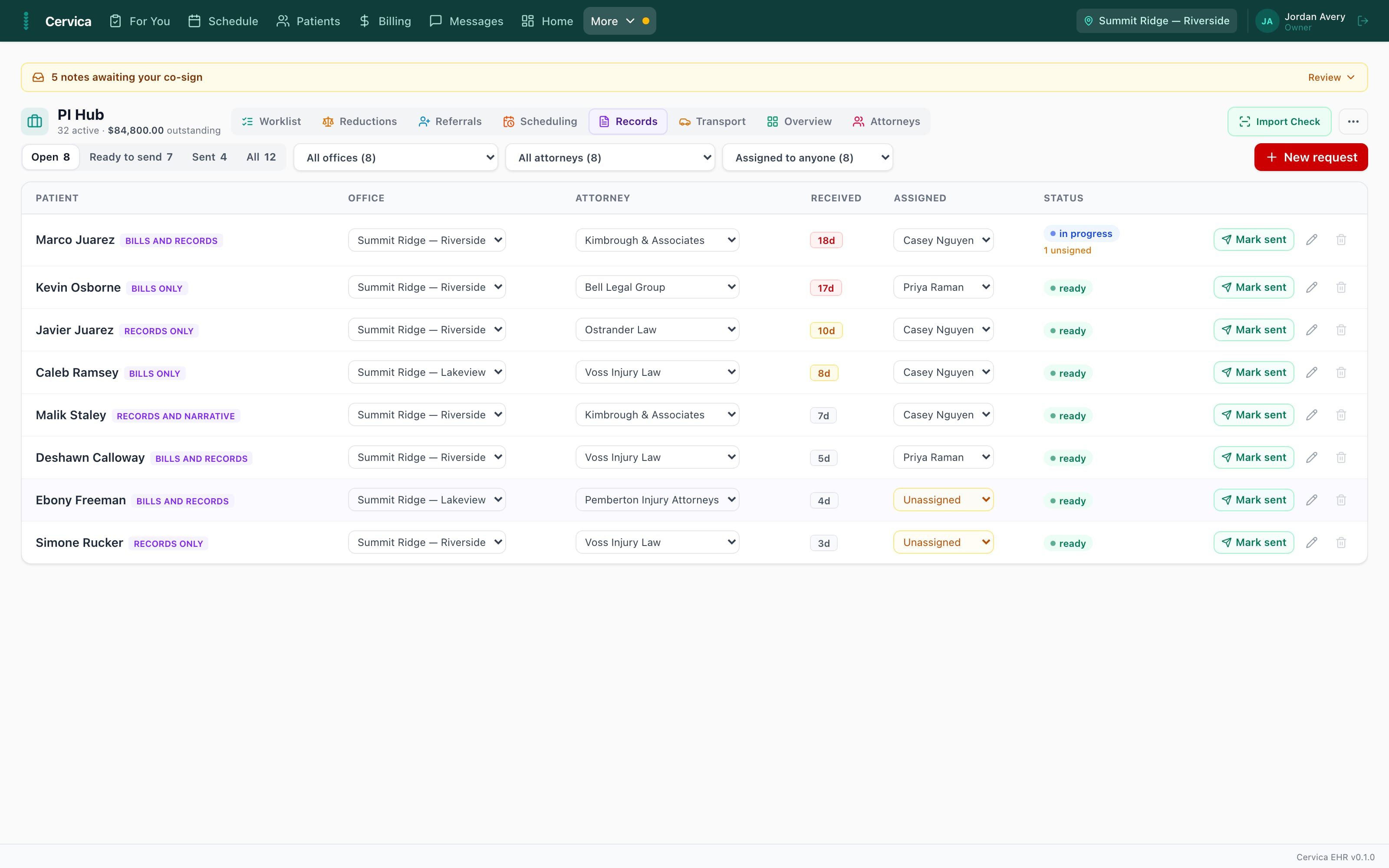
Records requests and package readiness
Track incoming records requests and check package readiness before preparing bills and records. Missing required information and unsigned notes need attention before completion.
Referral inflow you can see
Where new PI patients are coming from, week by week, with intake tracked from first call to first visit, so you know what is actually arriving.
Billing that understands PI
Lien based cases bill correctly without fighting the insurance workflow, med pay is handled through claims, and a full CMS-1500 batch for a case prints in one click when an adjuster asks.
Built inside a PI heavy practice
The founder's own three location practice manages a large personal injury book on Cervica every day. This module was not designed from interviews; it was built to survive Mondays.
The billing codes PI practices fight most
From the reference libraries: CO-22 coordination of benefits when health insurance and med pay collide, OA-18 duplicates from crossover confusion, and CO-109 wrong payer when the liability carrier should have come first.